Eco Moves in Wimbledon: Reuse, Recycle and Donate Tips
Moving house in Wimbledon can feel like a clean break, but it often leaves behind a surprising amount of clutter: a sofa that will not fit the new layout, a stack of books you forgot you owned, half-used cleaning products, and the odd drawer full of cables nobody wants to identify. That is exactly where eco moves come in. With the right reuse, recycle and donate tips, you can make your move lighter on the planet and, frankly, a lot easier on yourself.
This guide to Eco Moves in Wimbledon: Reuse, Recycle and Donate Tips is built for real life, not perfect Pinterest planning. You will find practical ways to sort items, decide what is worth keeping, and move through the process without creating unnecessary waste. If you are planning a local home move, a room clear-out, or even a larger property change, a more thoughtful approach can save time, reduce stress, and help good items find a second life.
Sometimes the difference between an exhausting move and a calm one is surprisingly small. One extra sorting session. One honest decision about the chair in the corner. One box sent to charity instead of landfill. Small things, yes. But they add up.
- Why eco moving matters in Wimbledon
- How reuse, recycle and donate moving works
- Benefits and practical advantages
- Who this is for
- Step-by-step guidance
- Expert tips
- Mistakes to avoid
- Tools and resources
- Law and best practice
- Options and comparison table
- Real-world example
- Practical checklist
- Conclusion
- Frequently asked questions
Why Eco Moves in Wimbledon: Reuse, Recycle and Donate Tips Matters
A move is one of the few times most households look at everything they own and ask, do I really need this? That is a good moment to make better choices. Eco-friendly moving is not just about being tidy or green for the sake of it. It is about reducing the amount of perfectly usable material that gets thrown away simply because nobody planned ahead.
In Wimbledon, where many homes are a mix of flats, terraces and family houses, space can be tight and access can be awkward. Narrow stairwells, limited lift space, parking pressure and timed loading windows all make bulky waste more inconvenient. If you leave decluttering until moving day, the whole job gets harder. The van is waiting, boxes are stacked, and suddenly nobody wants to debate the fate of the old bedside table. That is the moment waste happens.
Reuse, recycle and donate tips matter because they help you separate three very different outcomes:
- Reuse means keeping an item in service, either in your new home or by passing it to someone else.
- Recycle means sending material into a proper recycling stream where possible.
- Donate means giving usable goods to charities, community groups or people who can genuinely benefit from them.
Getting that distinction right reduces clutter, supports local communities, and can save you from paying to remove items that still have value. It also gives the move a slightly better feeling, to be fair. There is something reassuring about seeing a pile shrink because you planned, rather than because you panicked.
Expert summary: The most efficient eco move is usually not the one with the fewest boxes. It is the one where every item has a decision: keep, reuse, donate, recycle, or dispose responsibly.
How Eco Moves in Wimbledon: Reuse, Recycle and Donate Tips Works
The process is simpler than it sounds. You are not creating a perfect zero-waste operation. You are making deliberate choices before the move so less material ends up in general rubbish. The practical workflow usually follows the same pattern, whether you are moving a one-bedroom flat or a larger family home.
1. Sort by category, not by room alone
Room-by-room sorting is useful, but category sorting is better for decisions. Group similar items together: furniture, clothing, books, kitchenware, paperwork, toys, decor, and electricals. When you see eight mugs on one table instead of one in each room, it is easier to judge what really belongs in the new home.
2. Apply the four-part decision rule
For each item, ask four questions:
- Do I still use this?
- Would someone else use it?
- Can it be recycled safely?
- Is it too damaged to keep out of waste?
This cuts through sentimental hesitation. Not every item needs a long philosophical moment. Some things just need a yes or no. Honestly, that old lamp shade already knows the answer.
3. Create clear holding zones
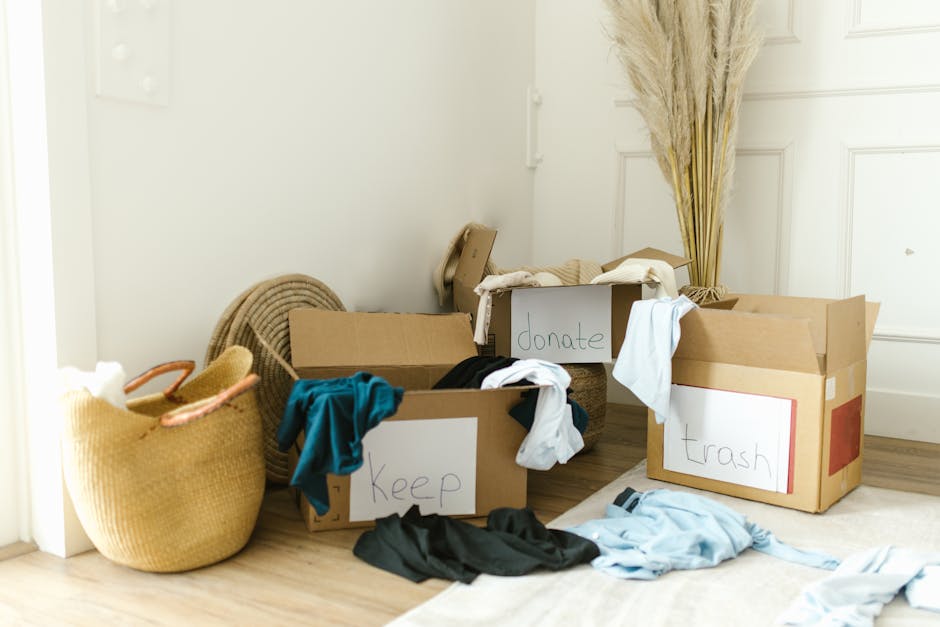
Set up separate areas or labelled boxes for keep, donate, recycle and dispose. If you are moving in Wimbledon with children, flatmates or a partner, this helps everyone stay on the same page. Without it, items drift from one pile to another and the whole system collapses into a "we'll decide later" mountain.
4. Match the item to the right route
Some things can go straight into boxes for the new property. Some can be collected, sold or given away. Others, particularly broken or mixed-material items, may need specialist handling. For example, old furniture that still has life in it may suit a dedicated pickup service such as furniture pick-up support, while a full domestic move may be easier to manage alongside home moving services or a flexible man and van option.
5. Time the move around collection and disposal
Eco decisions work better when they are scheduled. If donation collection, recycling runs or furniture pickup happens a few days before moving day, you avoid the last-minute scramble. The house feels calmer, and your moving crew does not have to step around an improvised charity pile in the hallway. Nobody enjoys that. Nobody.
Key Benefits and Practical Advantages
The obvious benefit is waste reduction, but there is more going on underneath. An eco-conscious move is often smoother, cheaper in practical terms, and less emotionally draining. Let's break it down.
Less waste, fewer decisions on moving day
When the clutter is already sorted, moving day becomes about transport rather than triage. That is a big deal. A move without pre-sorting can be slower because every object has to be carried, assessed and then dealt with later. With eco sorting done early, the job feels cleaner and more controlled.
Better use of space
If you donate or recycle items before moving, you only transport what is actually needed. This can reduce loading time and make space planning easier. For a smaller flat or a home with tricky access, that matters more than people expect. A van that is half-filled with things you no longer want is not exactly a smart use of space.
More value from good items
Many objects that people casually call "old stuff" are still useful to someone else. A bookshelf with a few scuffs, a dining chair set, spare kitchen items, a solid office desk, or a child's cot in good condition can all have a second life. Reuse is often the most sensible option because it preserves value instead of breaking it down into material waste.
Less stress, better momentum
Eco moves often feel more manageable because they create a rhythm. Sort, decide, remove, repeat. That rhythm gives you momentum. If you wait until the final evening and try to sort everything in one go, you will probably end up exhausted and surrounded by bin bags. Ask me how that goes. Not great.
Good for family homes and business moves alike
The same principles work whether you are organising a family relocation or a commercial clear-out. Offices tend to produce surplus furniture, old files, packaging materials and storage items, while homes generate a mix of furniture, clothing and household goods. If you are coordinating a larger business relocation, it may also be worth looking at commercial moves or office relocation services to keep the process ordered and efficient.
Who This Is For and When It Makes Sense
Eco moving is not just for very organised people with matching labels and a colour-coded pen. It works for almost anyone. If you are moving, clearing space, renovating, downsizing, or helping a relative empty a property, these tips are useful.
Home movers in Wimbledon
Families, couples and solo movers often discover that moving exposes how much unused furniture and clutter they have kept "just in case." If that sounds familiar, you are the exact audience for this approach. A more considered sort-through can reduce the amount you need to pack and unpack, and if you want hands-on help, packing and unpacking services can make the logistics much easier.
People downsizing
Downsizing is often where reuse and donation really shine. The new home may simply not have room for everything. Rather than forcing oversized furniture into a smaller layout, it makes sense to pass on what will not fit. Better that a good piece gets used elsewhere than sits in a hallway for three more months pretending to be "temporary."
Landlords, tenants and landlords' agents
End-of-tenancy clear-outs can become messy if belongings are left behind. An eco-minded process helps separate reusable household items from genuine waste and can make the handover cleaner. It is also more respectful, which matters when property changes hands quickly.
Small businesses and home offices
Businesses often need to dispose of filing cabinets, chairs, desks, monitors, storage units and packing materials. In those cases, reuse and recycling should be part of the move plan, not an afterthought. For larger jobs, moving support such as removal truck hire or a moving truck can help you keep reusable items protected while the rest is managed separately.
Anyone who simply wants a cleaner reset
Sometimes the reason is less practical and more personal. A move can feel like a chance to reset the home and the headspace. There is nothing grand or dramatic about it. Just the quiet relief of leaving behind the things you no longer need.
Step-by-Step Guidance
Here is a practical method you can follow without overthinking it. The goal is not perfection. It is progress that actually sticks.
Step 1: Start with the bulky items
Large items are the hardest to deal with, so begin there. Sofas, wardrobes, beds, dining tables and shelving units usually determine how much room you have left for everything else. If they will not fit the next property, decide early whether they can be reused, donated or collected. Large items can be awkward to shift at the last minute, especially in flats with tight stair access.
Step 2: Separate reusable items into donation-ready condition
Only donate things that are clean, complete and safe to use. A charity or recipient should not have to guess whether the lamp works or whether the chair wobbles dangerously. Add cables to the appropriate device if relevant, remove loose parts, and wipe items down where practical. A quick clean really helps.
Step 3: Recycle by material type where possible
Flatten cardboard. Keep paper separate from mixed waste. Sort textiles, metal items and small electricals if your recycling route supports it. Not every local route accepts the same materials, so the safest approach is to check before loading everything into one bag. A little planning now saves a lot of head-scratching later.
Step 4: Use donation routes for usable household goods
Think beyond obvious furniture. Kitchen items, books, toys, home decor, linens and office accessories can often be reused if they are in decent condition. The trick is honesty. If an item would not feel comfortable receiving yourself, it probably is not donation-ready yet.
Step 5: Arrange collection or transport early
If you are using a local moving team or a flexible collection service, book ahead so your reuse and donation plans fit around your move date. For example, if you have a heavy sideboard to move out before the moving truck arrives, make sure the timing works. That one detail saves a lot of friction. If you need a larger vehicle, options like man with van support can be a practical middle ground for lighter local loads or donation runs.
Step 6: Confirm disposal for true waste
Anything broken beyond repair, contaminated or unsuitable for donation should be dealt with properly. Do not just squeeze it into the nearest bin and hope for the best. Mixed waste and bulky waste need sensible handling. If you are unsure, err on the side of caution and separate it out.
Step 7: Review what you would do differently next time
That last bit matters. After the move, make a note of what slowed you down. Too many unlabeled bags? Donation pile started too late? Recyclables mixed into general boxes? A few honest notes now can make the next move far easier. You know how it goes. Moving teaches lessons whether you ask for them or not.
Expert Tips for Better Results
These are the small habits that make an eco move more effective in the real world.
- Handle sentimental items separately. Do not sort memory objects when you are tired. You will make strange choices, then regret them while holding a mug you didn't even like that much.
- Label donation boxes clearly. Mark them by category and condition, not just "donate." This helps anyone helping you load or unload.
- Keep one "decision pending" box. It prevents you from stalling on one awkward item for twenty minutes. Put it in there, move on, circle back later.
- Use reusable packing materials where sensible. Blankets, towels and clean bags can often protect items while reducing the need for extra single-use wrapping.
- Avoid mixing food waste, chemicals and electronics. These need different disposal routes. Even if they look small, they should not be bundled together.
- Take photos of items you plan to donate or sell. It helps with listing, valuation and keeping track of what is leaving the property.
- Protect reusable furniture during transit. If you are moving a piece you plan to keep, wrap corners and secure loose parts so it arrives in usable shape.
A small note from real life: the smoother moves are rarely the ones with the most fancy gear. They are the ones where someone decided, early on, to stop using a hallway as a storage unit. Simple, but effective.
Common Mistakes to Avoid
Eco moving sounds straightforward, yet a few common errors can trip people up quickly.
Leaving sorting until the final week
This is the biggest one. Once the boxes begin to multiply, people become less selective. Anything can get shoved into a sack and dealt with later. Later, of course, means never. Start earlier than you think you need to.
Donating damaged or incomplete items
Donations should be useful. Passing on broken items creates extra sorting work for charities and recipients. If a thing is missing a key part, repair it first or recycle it if possible.
Assuming everything recyclable can go in one bin
Recycling rules vary by material and local collection route. Do not guess. A mixed load can contaminate a whole batch. That means more waste, not less. A bit annoying, but easily avoided.
Ignoring bulky waste logistics
Large items need a plan. They take up room in vehicles, block hallways, and can slow the whole move if nobody is responsible for them. For awkward furniture, specialist collection through a service like furniture pick-up can be far more practical than leaving it to the last minute.
Keeping too much "just in case"
We all do it. Spare cords, spare chairs, spare boxes, spare everything. But if you are moving, each extra item costs space, effort and attention. Be honest about what actually earns its place in the next home.
Forgetting access and timing
A donation that sounds easy on paper can become complicated if parking is tight or lift access is limited. Wimbledon properties often have quirks. Plan for them instead of hoping they vanish.
Tools, Resources and Recommendations
You do not need a large toolkit, but a few practical items help a lot.
- Strong marker pens for clear labels.
- Reinforced boxes or crates for donation and keep piles.
- Reusable bags for clothing, linens and soft goods.
- Protective wrapping for items being reused in the new home.
- A phone camera for tracking items that are being sold, donated or collected.
- Cleaning cloths and basic supplies to make items donation-ready.
- A simple inventory list so you can remember what went where. Nothing fancy. Even a notebook works.
If you are coordinating a bigger residential move, it can help to combine the declutter phase with a broader moving plan. Services like house removalists or home moves may fit well if you want professional help handling the heavier parts of the process. For a lighter, more flexible approach, many people prefer a smaller vehicle or local transport arrangement.
Useful recommendation: Keep a "move day essentials" bag separate from the eco sorting piles. You do not want your passport, kettle lead or medication wandering off into the donate stack. Happens more often than anyone likes to admit.
Law, Compliance, Standards, or Best Practice
Eco moves are mostly about sensible planning, but there are some important best-practice points to keep in mind. In the UK, householders remain responsible for how waste is handed over, so it is worth being careful about where unwanted items go. You should only pass on goods that are safe and suitable for reuse, and you should make sure waste is taken by a legitimate route rather than left with an unknown collector.
Electrical items, furniture and mixed waste all need a little more judgment than a standard bin bag. If an item is damaged, unsafe or contaminated, do not donate it. If it contains materials that need specialist handling, separate it and use the right disposal route. That is not about being fussy. It is about avoiding accidental nuisance, unsafe reuse, or poor waste practice.
For businesses, standards are usually stricter in practice because office clear-outs may involve confidential paperwork, equipment handling, or facilities obligations. A commercial move should also be planned carefully so materials are sorted before they become a mixed-load headache. In those cases, it helps to work with a team that understands both relocation and the practical realities of item handling.
Best practice in plain English: keep records of what is reused, donated, recycled and disposed of, even if they are informal notes. You do not need a fancy spreadsheet unless you want one. But a simple list can help if questions come up later, especially during office moves or landlord handovers.
Options, Methods, or Comparison Table
Most eco moves come down to choosing the right route for each item. Here is a simple comparison to help you decide.
| Option | Best for | Pros | Watch out for |
|---|---|---|---|
| Reuse in your new home | Furniture, kitchenware, storage, decor | Saves money, avoids waste, keeps useful items in circulation | Only works if the item genuinely fits the new space |
| Donate | Clean, working household goods | Supports others, reduces waste, clears space fast | Items should be complete, safe and presentable |
| Recycle | Cardboard, paper, suitable metals, textiles, small electricals | Good for materials that can re-enter the system | Rules vary, and mixed waste can cause contamination |
| Specialist collection | Bulky or awkward usable items | Useful for heavy furniture and quick turnarounds | Book timing carefully and confirm access |
| Responsible disposal | Damaged, unsafe or non-reusable items | Removes true waste properly | Should be the last resort, not the first |
The easiest way to use this table is to start at the top and work down. If you can reuse it, do that. If not, can it be donated? If not, can it be recycled? Only then should you look at disposal. That simple order keeps your move cleaner and more intentional.
Case Study or Real-World Example
Picture a small Wimbledon flat move on a Saturday morning. The couple moving out had spent the previous week sorting through the loft, the airing cupboard and the spare room that somehow became the default dumping ground. Nothing dramatic, just normal household clutter.
They set up four clear zones in the lounge: keep, donate, recycle and dispose. The bookcase they no longer wanted went into the donate pile after a quick wipe-down. Several boxes of paper, packaging and old manuals were flattened and separated for recycling. The coffee table stayed because it fit the new space. A broken bedside drawer was moved into the dispose area rather than hidden under a blanket and forgotten.
On the day itself, the moving load was lighter because the awkward items had already been handled. No one was standing at the door asking whether the old lamp should stay "just in case." It had already been decided. The result was a calmer move, fewer wasted journeys, and a much cleaner first night in the new place. They still had a pile of things to unpack, sure, but the worst of the clutter was already gone.
That is the real win with eco moving. It does not need to be perfect. It just needs to be decided.
Practical Checklist
Use this checklist a few days before your move. If you can tick most of it off, you are in good shape.
- Separate items into keep, donate, recycle and dispose piles.
- Check furniture and household items for damage or missing parts.
- Clean reusable items so they are ready for a new home.
- Flatten cardboard and bundle paper separately where possible.
- Set aside electricals and cables for the correct handling route.
- Book any collection or transport support early.
- Label all boxes clearly.
- Keep a list of items going to donation or recycling.
- Pack essentials separately from declutter piles.
- Review access, parking and timing for moving day.
- Make sure anything not suitable for donation is dealt with responsibly.
If you are moving a business or a larger property, it can also be sensible to coordinate logistics with the right type of vehicle and crew. For heavier loads, removal truck hire can help keep transport organised and reduce the temptation to make multiple unnecessary trips.
Conclusion
Eco moves in Wimbledon are really about making thoughtful choices before the pressure builds. Reuse what still has life in it. Recycle materials properly. Donate usable items so they continue to help someone else. That simple framework keeps waste down and makes the whole moving process feel more manageable.
If you start early, sort honestly and give each item a clear destination, the move becomes much less chaotic. And let's be honest, moving is chaotic enough already. There is no need to add a mystery pile of old cables on top of it.
Whether you are clearing a family home, shifting a flat, or planning a commercial relocation, the same principle applies: move with purpose, not just speed. A little care now makes the next place feel lighter from day one.
Get a free quote today and see how much you can save.
If you want a move that feels calmer, cleaner and better organised, explore the team's services and reach out through contact us when you are ready to plan the details.
Frequently Asked Questions
What counts as an eco-friendly move?
An eco-friendly move is one where you reduce waste by reusing items, recycling materials correctly and donating usable goods instead of throwing everything away. It is more about careful sorting than perfection.
What should I donate before moving house?
Donate items that are clean, complete and safe to use, such as furniture, books, kitchenware, linens and decor. If you would not happily receive the item yourself, it probably is not donation-ready.
Can I recycle old moving boxes and packing paper?
Usually yes, provided they are clean, dry and suitable for your local recycling route. Flatten boxes first so they are easier to handle and take up less space.
How do I decide whether furniture should be reused or recycled?
If the furniture is sturdy, safe and likely to suit the next space, reuse is usually the best option. If it is damaged, unstable or no longer functional, recycling or responsible disposal may be more appropriate.
Is it better to donate or sell items before a move?
That depends on time and condition. Selling can help recover some value, but donation is often faster and simpler. If your moving date is close, donation usually wins on practicality.
What happens if I leave decluttering until moving day?
You will probably end up rushed, stressed and less selective about what gets packed. Moving day is the worst moment for making thoughtful decisions, so try to sort well before then.
How can I move bulky items responsibly in Wimbledon?
Book transport or collection support early and make sure access is clear. For larger furniture, dedicated pickup or a suitable vehicle can save time and reduce the risk of damage.
Do I need to clean items before donating them?
Yes, ideally. A quick clean makes items more useful and more likely to be accepted. It also shows respect to the next user, which is really the point.
What should I do with broken electrical items?
Broken electrical items should not be mixed with general waste or donated. Keep them separate and use the appropriate recycling or disposal route for electricals.
Can eco moving help reduce moving costs?
It can, indirectly. If you move fewer items, you may save time, space and transport effort. You are also less likely to pay to move or store things you no longer need.
Is there a difference between a man and van and a full removal service?
Yes. A man and van option is usually more flexible for smaller or lighter loads, while a full removal service is better suited to larger or more complex moves. The right choice depends on your inventory and timing.
What is the best first step if I want a greener move?
Start by sorting bulky items and creating donate, recycle and dispose piles. Once the large decisions are made, the smaller packing tasks become much easier to manage.